
1. Overall coop improvements:
Numbers on the drawing (the coop layout) correlates with the highlighted yellow numbers in the list below. 7s are two doors and 12 are the nests
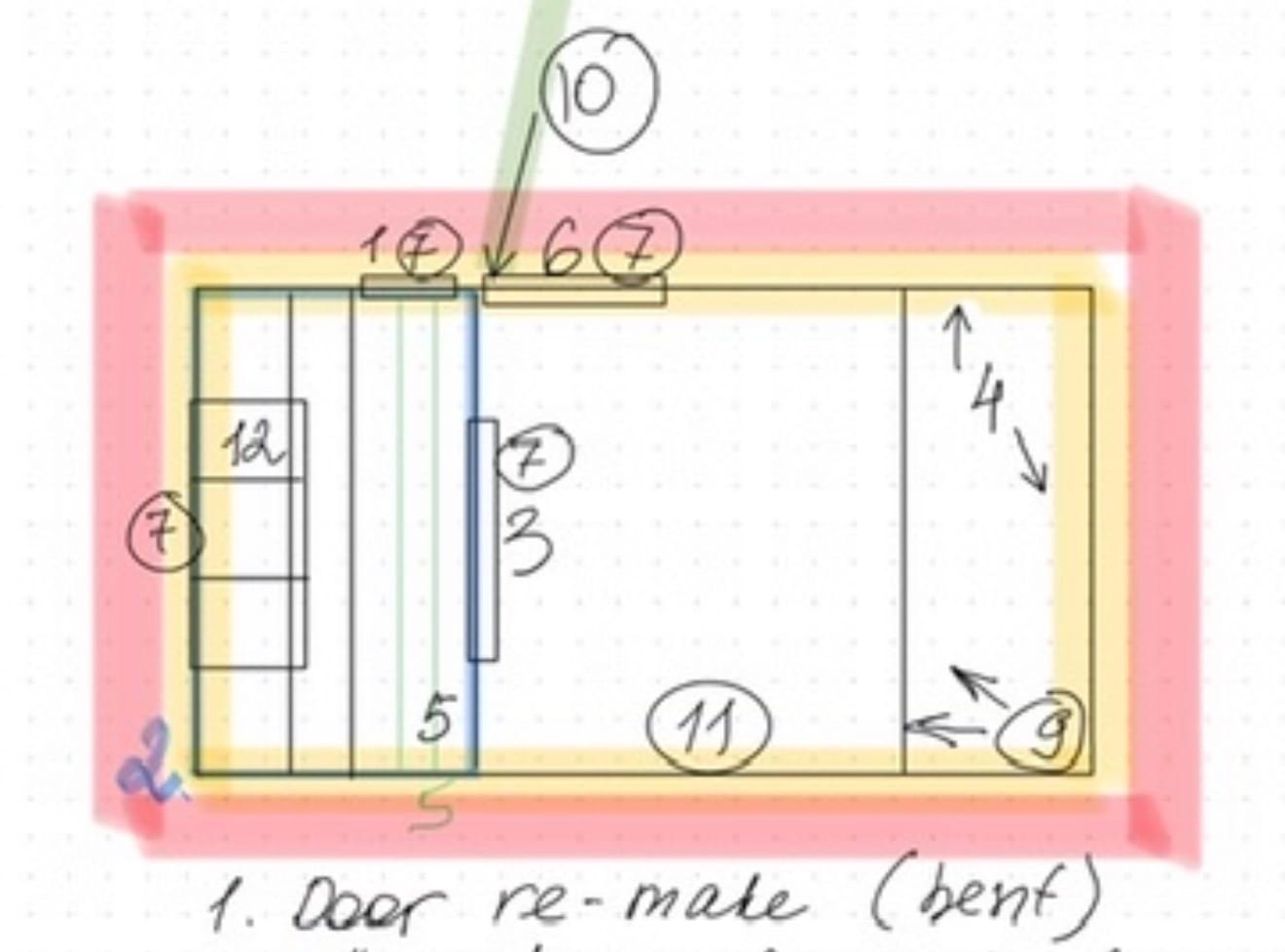
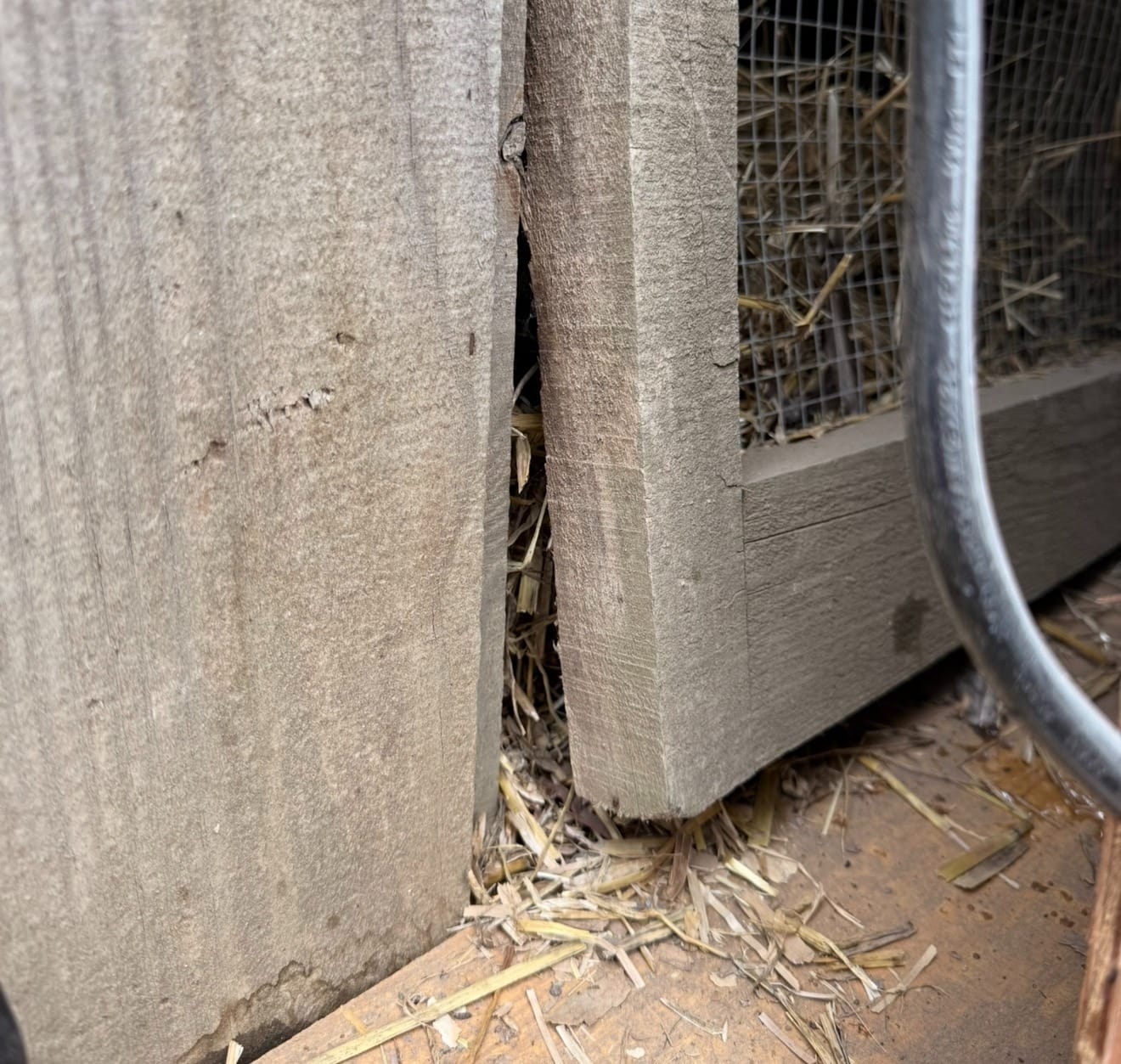
- Door remake and paint, protect from rain/ humidity (bent) (1).
- Roof leaking, seal the holes or put patches over: https://a.co/d/04BFgDc9
- Acrylic roof panels for next winter as a wind breaker (separate section for more details)
- Automatic chicken door (solar) (3). Safe place at night, convenient current coop location - ideal for using solar automatic door: https://a.co/d/0cG3X1Rd
- Paint black on the mesh (optional, just nice looking).Put another (second) mesh outside (safety and security).
- Move roosts to the opposite side and make it wider (2x4) (5)
- poop on the nests
- not safe feel (will lay more probably)
- wind and too cold in winter
- too hot in summer – sun side
- Door improvement (7):
- add extra wire (mesh) outside
- make it higher for easier opening (extra hinges) (7)
- extra overlapping wire on top and bottom for security(foxes, raccoon, small birds, rats)
- Second lock on each door (raccoons can easily open this one) (10).
- Mesh wire in the ground or concrete blocks around the coop (red highlight).
- Optional summer prep:
- solar day-time cooling fan (north-west)(4)
- Winter prep – electricity & water:
- heated water with anti-freezing sleeve
- fire safety: electrical outdoor outlet with rain protection and GFA breakers
- cable connections with rain/conduit sleeve
- or one 100 ft 12-AWG cable from garage to the coop’s outdoor outlet
- Safety (and fun) (9):Install solar camera to watch chickens and scare foxes if needed.
- Optional:
- install 45° cover above nests — hens feel more safe(above the outdoor access door) (12)
- sound and wind protection from inside on the back of the nests row (7)
Security & safety checklist
Physical security (predator proof)
- Door remake to ensure proper closing
- Extra wire mesh on the outside of doors
- Overlapping wire at top and bottom of doors (anti-weasel, raccoon, fox)
- Second lock on each door (raccoon-proof)
- Additional exterior mesh layer
- Mesh wire buried in the ground or concrete blocks around the coop perimeter (inside and outside)
- Door height improvement for easier and safer operation
Security-by-design clarification (important)
Add an additional exterior mesh layer for security.The mesh must be installed outside of the structural poles.
- The mesh is not for preventing chickens from escaping.
- Its purpose is to stop predators from getting in (raccoons, foxes, dogs, large animals such as bears).
- When mesh is installed outside the poles, external push force is transferred to the frame, not to staples or fasteners. Predators lean over mesh to leave their scent but also push it further each time - this is how they will get in
- The current issue: Mesh installed inside the poles can be pushed inward or torn loose under force:
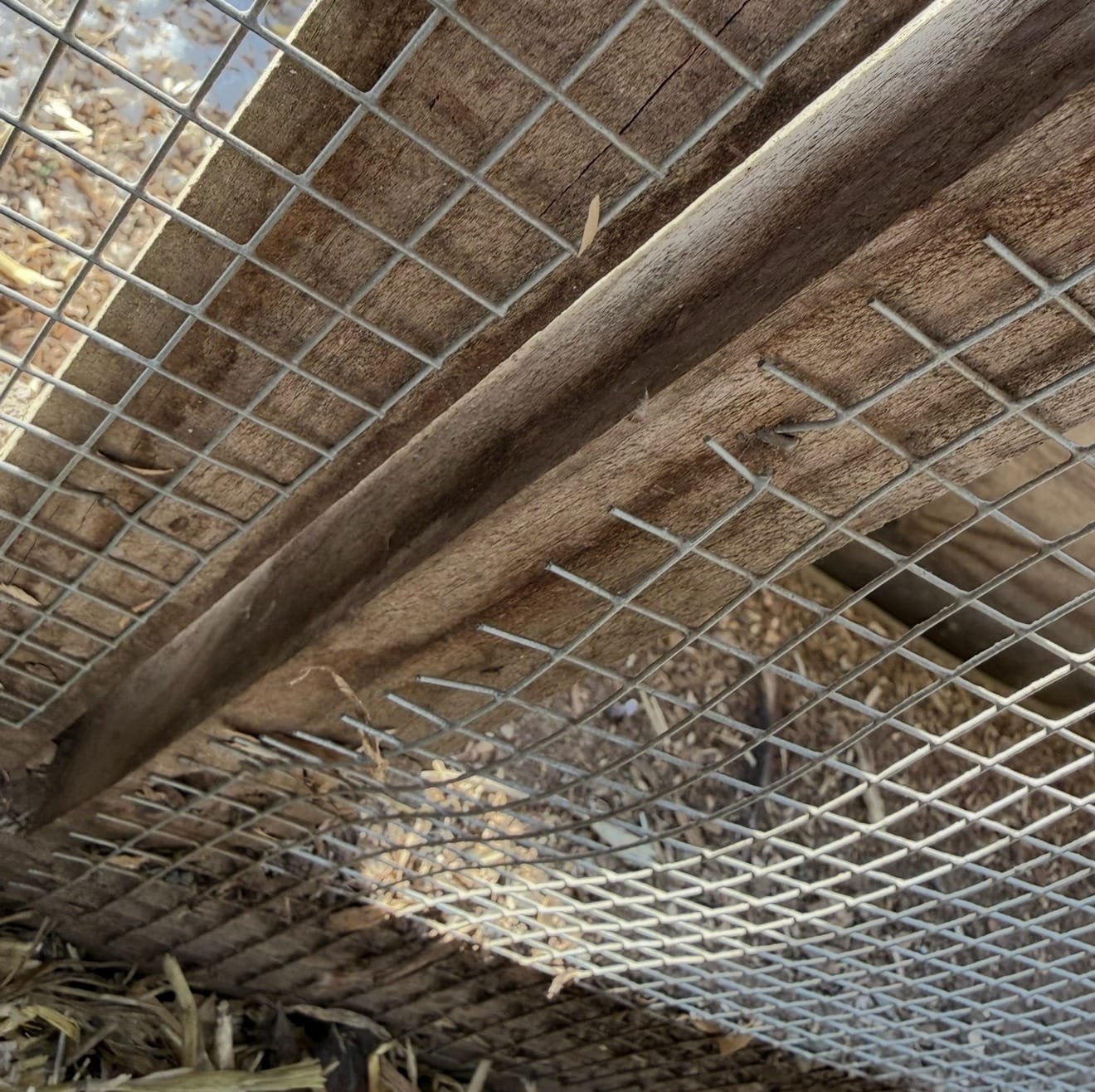
Adding an exterior mesh layer is therefore not cosmetic - it is mainly fixing a coop design flaw.
Painting above the first layer of mesh is aesthetic only: it will be invisible and look nice.
Process improvement (predator proof)
- Feeding containers fully sealed on top with funnels: https://a.co/d/0aJJx3gM Predators coming for the chicken food, if it’s in open containers. The feed also will absorb water and will mold.
- Extra wire mesh on the outside of doors: https://a.co/d/03lwWXCj
- Overlapping wire at top and bottom of doors (anti-weasel, raccoon, fox)
- Second lock on each door (raccoon-proof): https://a.co/d/0f8vP15Y
- Additional exterior mesh layer: https://a.co/d/03lwWXCj
- Mesh wire buried in the ground or concrete blocks around the coop perimeter (inside and outside)
- Door height improvement for easier and safer operation
Electrical & fire safety (you need it for the next winter set up only)
- Outdoor electrical outlet with rain protection (like temporarily installed ours):
- https://a.co/d/0g5RC0El
- GFA breakers (protection from the short circuit and overload)
- Rain/conduit sleeve for cable connections (like those yellow ones ours): https://a.co/d/0iJWOwX2
- One continuous 100 ft 12-AWG cable from garage to coop (rain and damage protection): https://a.co/d/0iyjpCys
- Heated water system with anti-freezing sleeve (could be plant heating mat): https://a.co/d/0iffS61j
Monitoring & deterrence
- Solar-powered camera to:
- watch chickens (notice eggs being laid and prevent eggs eating behaviour)
- scare foxes if needed
- The best I am using is Tabo 402 (Solar): https://a.co/d/01uxaBZT
- You will need flash card for it: https://a.co/d/0944slpM
Winter preparation
- Install acrylic panels as a wind breaker around the coop only (not run): https://a.co/d/01ZjgYit
- Electricity (proper cable from the garage).
- Wrapped heated waterer with nipples.
Summer preparation
- Remove acrylic roof panels($56 each + mount hooks).
- Switch to a different waterer without heating.
- Remove the electrical cable from the garage.
Optional improvements for low maintenance
Feed management
- Large storage container with funnel feeders
- Sealed cover
- Raised stand
- No waste feed
- Mix 3 types of feed for better efficiency (chicken and pet feed don’t have strict requirements like human food and can cause issues)
- Cost: $70 DIY or $100 fully made: https://a.co/d/09LFO5yH
- Provides 3-4 weeks of feed for 5 chickens
- Treats are given separately only
Automatic waterer
- Large container plus row of gravity waterers: https://a.co/d/04jFMIJC and https://a.co/d/04kzcgQ7
- Does not require electricity
- Refilled only once every 3-4 months
- Will break / not work in freezing temperatures
- Must be replaced with temporary winter waterer
Cameras & automation
- Camera allows you to:
- see feed level
- see water level
- detect automatic door problems
- Second camera at the nests:
- should not turn on automatically on movement
- must have infrared night vision
- solar-powered is best
- allows you to see number of eggs
- helps observe problems with chickens
Environmental monitoring
- Temperature and humidity sensor: https://a.co/d/04gwDsVB
- Shows if:
- coop is colder than outside → need winter wind breakers
- coop is hotter than outside → need fan in summer
Increase eggs production:
Right now, the nest is close to the wall with holes where hens might not feel safe.
They also poop a lot on them, it can be fixed if the roost is moved to the opposite wall and on top (under the roof) so they will sleep there and feel safe.
Nests could be on the same location, but have to have solid backs (can be installed on the out wall like flipping down plywood) to access and take eggs. Nests should be covered on top and on back: https://a.co/d/0jlPnUhr
It would also help a lot to have natural disposable nests pads there: https://a.co/d/01gYruuL
If they were eating their own eggs at least once this winter, you might need to install camera to catch that in time (that behaviour really hard to fix) and might need to install roll out nests for couple of months to prevent them to do that again: https://a.co/d/07nWFYXm
We have those, you can borrow them, we don’t using them now.
Add brewer yeast to the feed: https://a.co/d/0c04zWfw
And electrolytes and probiotics to water: https://a.co/d/04uSNr3z
I would also organise for them dust bath: help to prevent digging from the chicken sides and great prevention against mites and parasites. You will need Low-profile rubber pans that you can buy in the tractor supply and put there ¾ of peat moss, ¼ of ashes from your fire place or fire pit and 4 table spoons of DE: https://a.co/d/0afBm969
Free range:
You can extend current fence for the free range with that electric fence (safe for chickens): https://a.co/d/0eA1mB0c and solar charger for it: https://a.co/d/06YvSyTE you can move it from side to side, as soon as they destroy the soil on the current place
Hiring the handyman:
If you will hire someone to fix the coop, here what I would ask them to do:
- Door remake, so it would be straight, fit tightly on the floor (foxes can squeeze to 4 inches hole between door and ground!) and paint, protect from rain/ humidity.
- Paint with wood sealant over ALL wooden parts: https://a.co/d/0bagl5aL
- Roof leaking - paint it with sealant: https://a.co/d/04BFgDc9
- Install plywood on the bottom side between the chicken coop and run and install the automatic solar door there on 24 inches height and put board plank for chickens to get there (they will have the feeling that it's a safe place):
- Install the automatic chicken door (solar). Safe place at night, convenient current coop location - ideal for using solar automatic door: https://a.co/d/0cG3X1Rd
- Paint black on the current hardware mesh (optional, just nice looking): https://a.co/d/0evP0Dat
- Put another (second) mesh outside (safety and security) (important! Because it’s already pushed inside in several places by various predators): https://a.co/d/03lwWXCj
- Move roosts to the opposite side and make it wider (2x4) (Lowes, not treated!)
- poop on the nests (harder to clean and more often)
- not safe feel now (will lay more probably)
- wind and too cold in winter
- too hot in summer – sun side
- Door improvement:
- add extra wire (mesh) outside: https://a.co/d/03lwWXCj
- make it higher for easier opening (extra hinges) and extra lock:
- extra overlapping wire on top and bottom for security(foxes, raccoon, small birds, rats)
- Second lock on each door (raccoons can easily open this one): https://a.co/d/0f8vP15Y
- Mesh wire in the ground or concrete blocks around the coop.
- Optional summer prep:
- solar day-time cooling fan (north-west - perfect location for it): https://a.co/d/0hUS84Kc
- For summer prep you will need to remove all straws from the coop and I would recommend to put there pine horse bedding pellets from Tractor Supply $7 /bag
Before all those works, you need to order on Amazon parts that listed (much cheaper and higher quality than in stores, and buy in the Lowes: 2x4 6 feet (3) untreated, plywood, probably one high quality sheet $24 and I would buy also 10-20 garden stones to put around the coop to prevent fox digging (like main that I left there to cover the hole under the door)
Tractor supply shopping list:
3 different types of layer feed (mix in the container to decrease risks of poor quality)
Horse bedding pellets
Low-profile rubber pans (for dust bath)
Other things to pay attention in the weekly check or video camera checks:
Chicken video surveillance & smart coop design
1. Automatic door timing & predator risk
- Auto door opens at set sunrise time.Dawn and dusk are the most dangerous predator hours. Predators see perfectly in low light. Chickens don’t. They are practically blind in twilight.
- Auto door closes 1 hour after sunset (if not closed manually by humans).This gives chickens enough time to get inside naturally.
- Manual close = safety check.We usually close it manually to confirm everyone is inside and nothing unusual is happening.
2. Feeders: placement & ambush prevention
- Place feeders on high-rise stands, hang them on chains, or use tunnel feeders.
- This prevents:
- High humidity in feed
- Mold formation
- Strong smell spreading at night
Predators often start with smell. They plan ambushes because of feed odor. Then they notice the “tasty, blind chickens at dusk.” Hard to resist (for them… honestly, understandable).
Proper coop + feeder design can prevent around 90% of planned predator ambush behavior
3. Daily (monthly if you have cameras) inspection routine
When checking chickens:
- Look for digging signs around the cage and run - inside and outside.
If digging is:
- Outside → likely predators.
- Close feeders
- Place stones or bricks around perimeter
- Inside → likely chickens dust bathing.
- Create a designated dust bath zone
- Place bricks along mesh edges
- Chickens usually dig in the sunniest area
5. Roost design & scent control
- Install high roosts in the center of the coop.
- Avoid placing roosts near outer walls.
Why?Sleeping chickens release scent. If they roost near outer walls, predators detect them more easily.
Central high roost:
- Reduces scent exposure
- Makes chickens feel safer
- Adds vertical safety buffer
6. Water failure & egg eating behavior
If water freezes and chickens go without water for a period:
- They may start eating their own eggs.
- You may not notice immediately.
- The issue becomes visible only in summer when laying increases and you see “missing eggs” or inconsistent production.
7. Monitoring egg behavior (most likely happened in absence of water)
To detect egg eating:
- Install infrared solar camera
- With motion detection (pet sensitivity)
- Set the area of movement to track
- Review recordings periodically.
You may see:
- Eggs appear in one recording
- Disappear in the next
This confirms behavioral issues.
8. Drinking training problems (not observed but possible)
Chickens trained on spoon waterers may:
- Not understand nipple drinkers
- Especially in small flocks (no peer teaching)
- They may not recognize water if they don’t see movement
Always monitor transition to new watering systems.


