
Did you know that the eggs you buy in grocery stores are often at least 1.5 months old? They are also washed, which removes their natural protective bloom. Because of that, their shelf life is about three times shorter, and they must be stored in the refrigerator all the time.
But did you know that only old eggs—older than 4–5 weeks—can be peeled easily after boiling? That’s why grocery-store eggs peel so easily, while fresh farm eggs are incredibly hard to peel (even after an ice bath).
Our eggs are sold out 3–4 days after being laid, and we cook with them right away—not even the same day, sometimes within the same hour they’re laid. And it was torture trying to figure out how to boil them so they would peel easily.
I tried everything: vinegar, ice baths, salt, more salt, more ice—nothing worked.
I got fed up and spent three days doing very deep research on egg pH changes, inner shell collagen, and calcium levels, trying to understand why—why, God, WHY—half of the egg peeled off together with the shell after boiling.
And I succeeded.
Now even very fresh eggs peel like a dream. It looks like you shake them a bit, and the shell just slides off, leaving a smooth, unchipped white.
First, you need two tools.
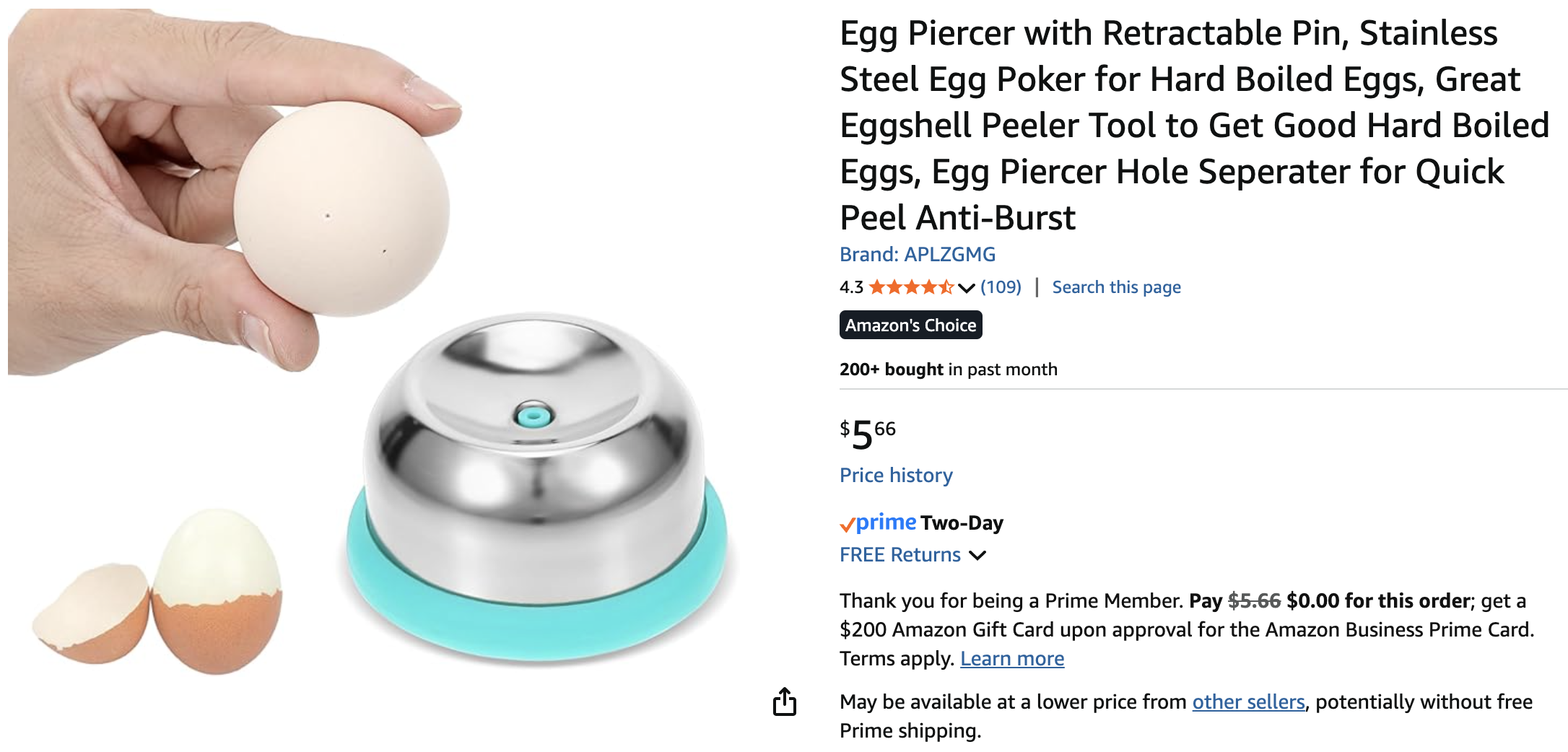
The first is a needle for piercing the dull end of the egg. You can use a regular needle, but this tool is designed so the needle pierces only the shell and does not go through the air pocket, which is very small in fresh eggs:


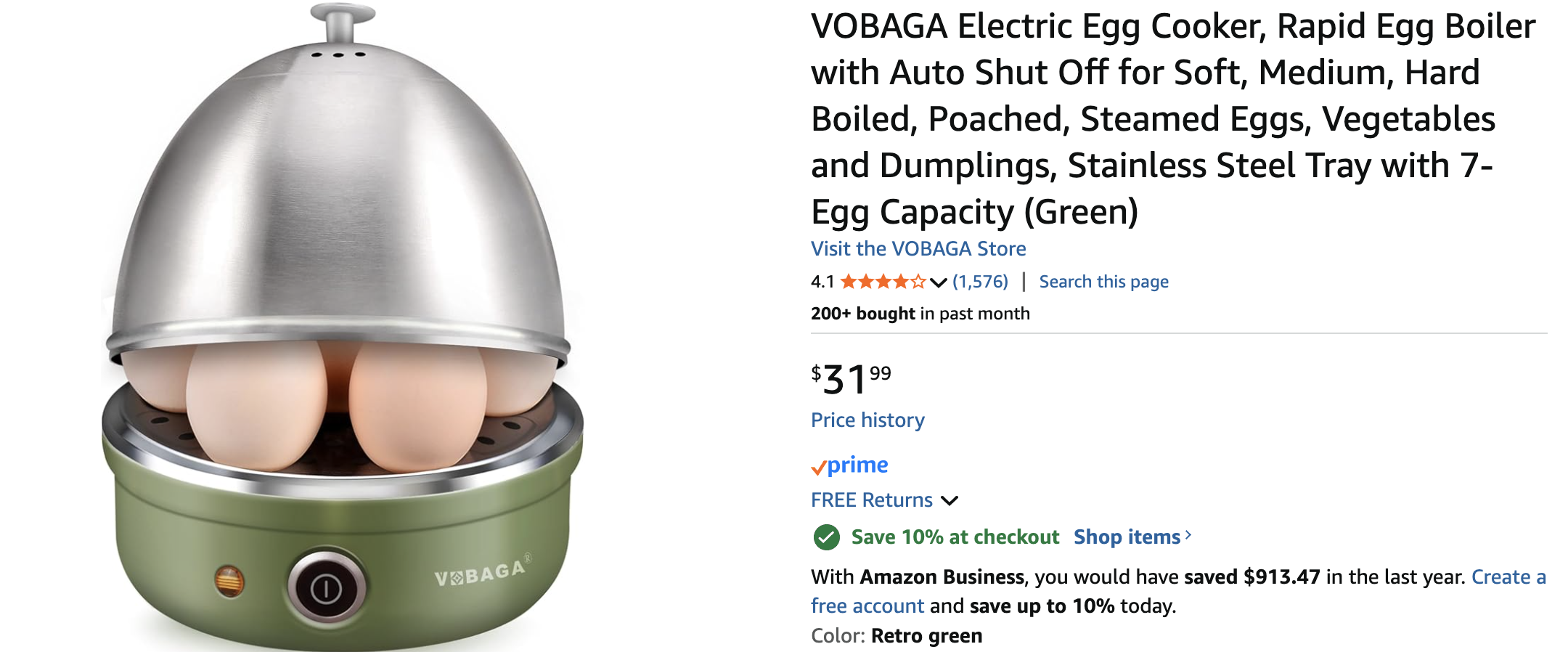
Second, you need a steam egg boiler. I waited SOOOOO long for these devices to be made from steel instead of plastic—and it finally happened:
 From the Author
When you have both, this is all you need to do:
Pierce each egg on the dull side and place it on the tray. Add water and set the top timer to the time recommended for the device. I use 4 minutes for soft-boiled eggs (for small, not extra-large chicken eggs) and 6 minutes for hard-boiled eggs. I do not recommend using the auto shut-off, because it works as an overheating protection mechanism and turns off too late, making the eggs smell like burnt egg white.
After that, put the eggs into an ice bath—and voilà.
Write comment if you knew already about that trick or if you didn't and tried it!


